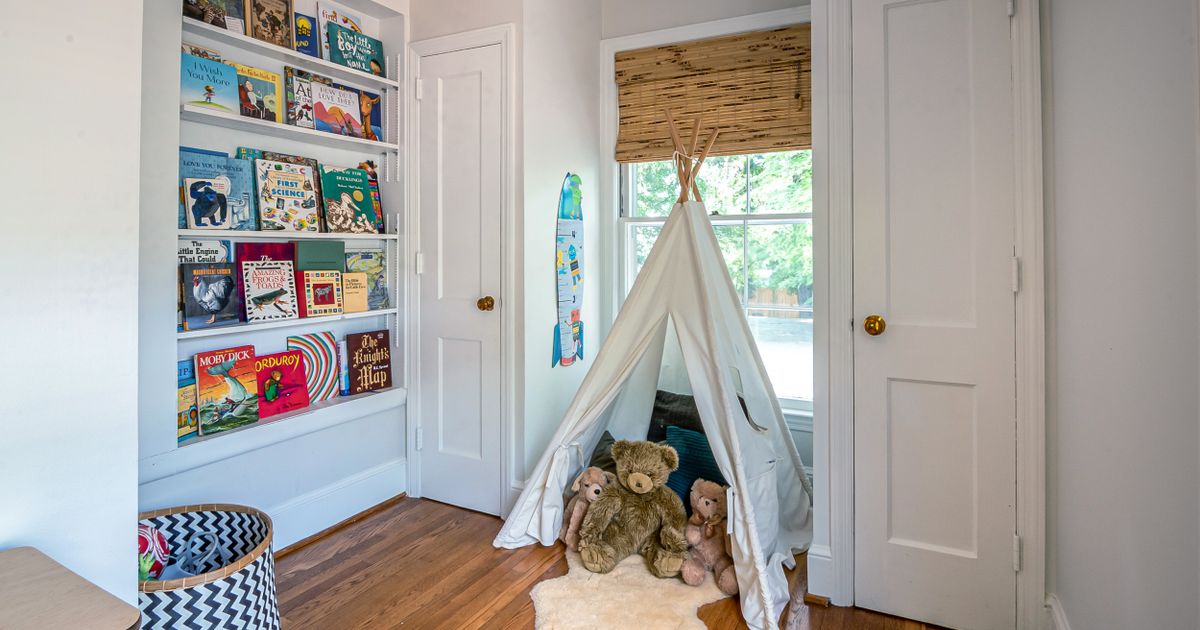
I’ve walked into a lot of classrooms with a beautiful calm down corner in the back — soft lighting, a nice chair, laminated posters — that nobody actually uses by October. Not because the idea was bad. Because a calm corner isn’t a design project. It’s a system, and most of them are built like decorations instead.
If you’re setting one up at home or in a classroom, here’s what separates the ones that get used from the ones that quietly become storage space by mid-semester.
It Has to Be Taught, Not Just Built
A calm corner that’s introduced once, in passing, during the first week of school will not be used correctly under real stress months later. Kids need to practice going to the calm corner during calm moments — role-playing it, walking through it, using it when nothing’s wrong — so it’s familiar enough to actually reach for when something is wrong. A space nobody’s practiced using becomes a space nobody remembers exists in the moment they need it most.

The Visuals Need to Match the Reading Level and Regulation State
Posters with long paragraphs of instructions are useless to a dysregulated kid. In an escalated state, reading comprehension and processing both drop significantly. Visuals need to be simple, high-contrast, and mostly wordless or minimal-word — a breathing exercise shown in steps, a simple feelings chart, a small number of clear coping options rather than an overwhelming menu.
Give a Structured, Limited Menu of Options
An open-ended calm corner (“go calm down”) gives a dysregulated kid a decision to make at the exact moment decision-making is hardest. A better structure offers two or three concrete choices — a breathing card, a fidget, a weighted item, a quiet corner to sit — displayed visually so the choice itself takes almost no cognitive effort.
Build In a Way Back to the Group
A calm corner that has no clear exit point becomes a place kids either avoid (because leaving it feels awkward or public) or overuse as an escape from demands rather than a true regulation tool. Build in a simple, low-pressure way to signal “I’m ready” — a card to flip, a check-in with an adult, a quiet nod — so returning doesn’t feel like a spotlight moment.
Keep It Visually Calm, Not Visually Busy
More decoration is not more helpful. A corner covered in bright colors, multiple competing posters, and visual clutter can actually work against regulation for kids who are sensitive to sensory input. Simple, muted, and organized beats colorful and crowded, even though the colorful version often photographs better for a classroom tour.
Revisit It Throughout the Year, Not Just in August
Kids’ regulation needs shift as the year goes on — what worked in September may not land the same way in February. Check in periodically: are kids actually using the space, are the coping tools still relevant, does anything need to be swapped out. A calm corner that’s never revisited after setup slowly drifts out of sync with the kids using it.
At Home vs. At School
The same principles apply at home, with one adjustment: home calm corners can be smaller and less formal, but they still need the same structure — taught in advance, simple visuals, a limited menu of options, and a clear way back to the family or activity. A corner that only exists during a meltdown, with no advance practice, will feel unfamiliar exactly when it’s needed most.
The Classroom Where It Actually Held Up
A third-grade teacher I worked with rebuilt her calm corner mid-year after noticing it had become a place kids avoided rather than used. The original version had six different posters, a string of fairy lights, and a large “feelings wheel” with dozens of emotion words — visually impressive, functionally overwhelming for a kid already struggling to regulate.
The rebuild cut it down to two simple visuals: a four-step breathing card and a three-option choice board (squeeze ball, quiet corner, or a short walk with a buddy pass). She spent the first two weeks of the new version explicitly teaching it during calm moments — a five-minute practice session twice a week, role-playing what to do when feeling overwhelmed, well before anyone actually needed it under stress. By the second month, kids were using it independently, including one student who’d never used the original version once in four months.
Nothing about the room’s square footage changed. What changed was treating the space as a system to be taught, not a corner to be decorated.
Getting Buy-In From the Adults Using the Space Too
A calm corner only works consistently if every adult in the room — not just the teacher who designed it — understands how it’s meant to function and reinforces it the same way. If one aide treats it as a reward for good behavior and another treats it as a genuine regulation tool available anytime it’s needed, kids get mixed signals fast, and mixed signals undermine trust in the space overall.
Before rolling out or rebuilding a calm corner, take ten minutes with every adult who’ll be in the room — co-teachers, aides, any regular support staff — and get explicit agreement on how it’s offered, what language is used, and what the expectations are around using it. This kind of alignment costs almost nothing up front and prevents a huge share of the confusion that causes calm corners to quietly fall apart within the first month.
Common Questions About Calm Down Corners
What age is a calm down corner appropriate for? The concept works from early elementary through adolescence — the visuals and tools just need to be adjusted for developmental level and independence.
How do I know if a calm corner is being used as an escape instead of a regulation tool? Watch the pattern: if a kid consistently heads there right before a demand rather than during genuine escalation, that’s worth addressing directly, possibly by tightening when and how it’s offered.
Should a calm corner have a timer? A visual timer can help some kids, giving a concrete sense of “how long,” but it’s not universal — some kids do better with an open-ended, self-paced approach. Watch what actually helps your specific kid regulate.
The Calm Down Corner Poster Kit gives you the simple, wordless visuals this actually requires — coping strategy posters, breathing exercise cards, and emotional check-in visuals designed to be understood at a glance, even mid-meltdown.